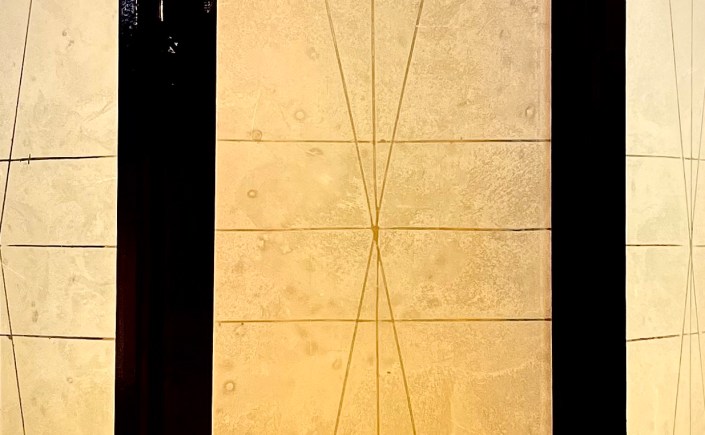
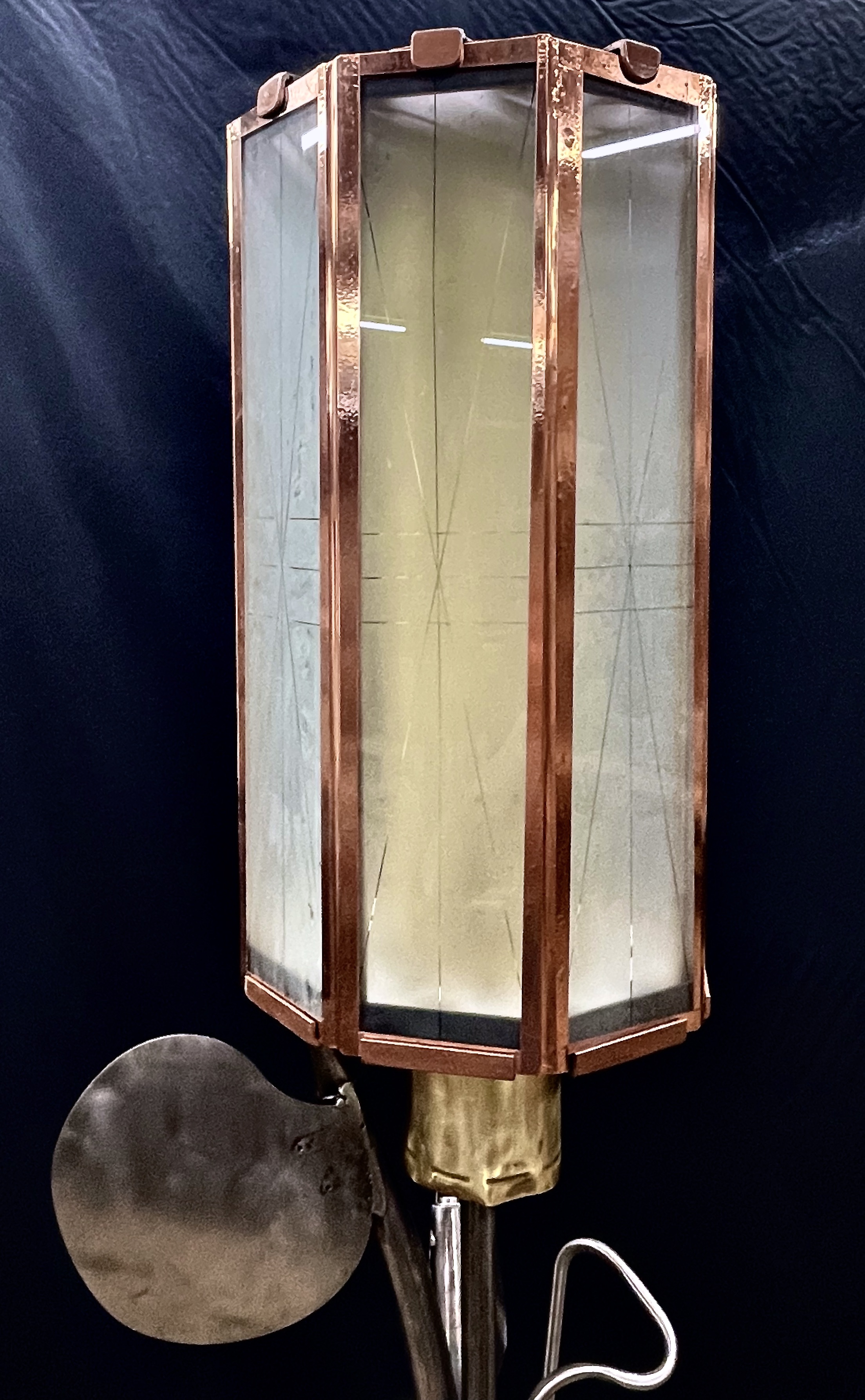
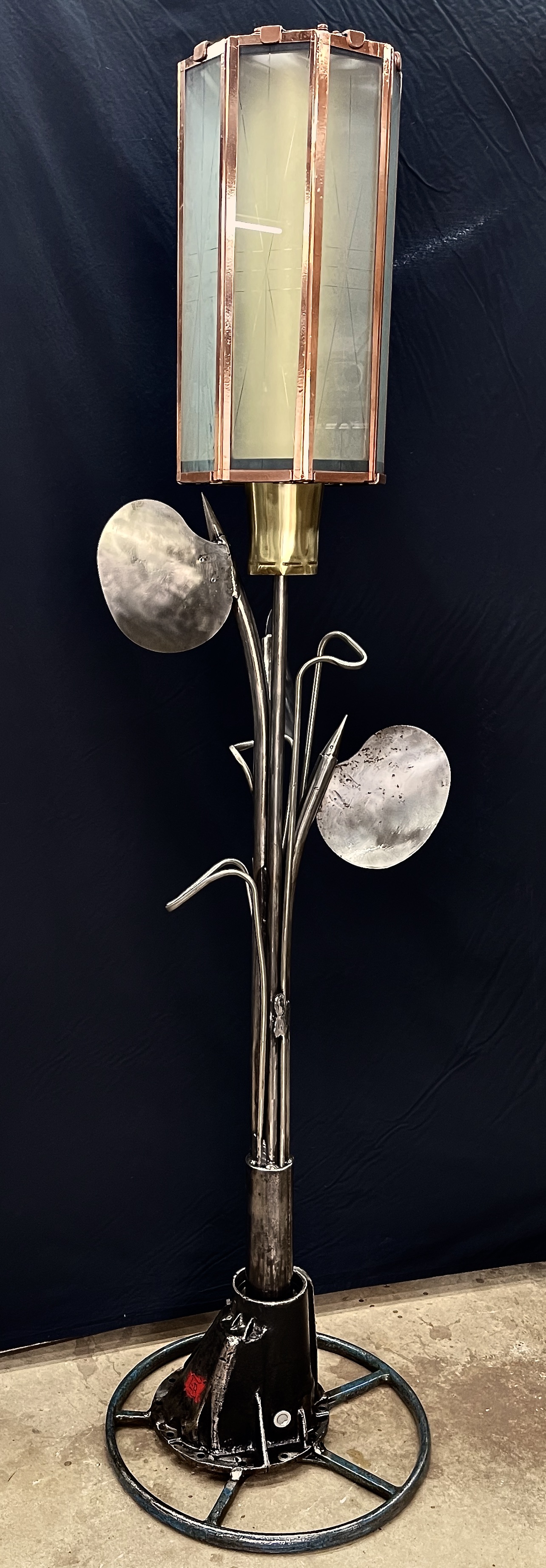
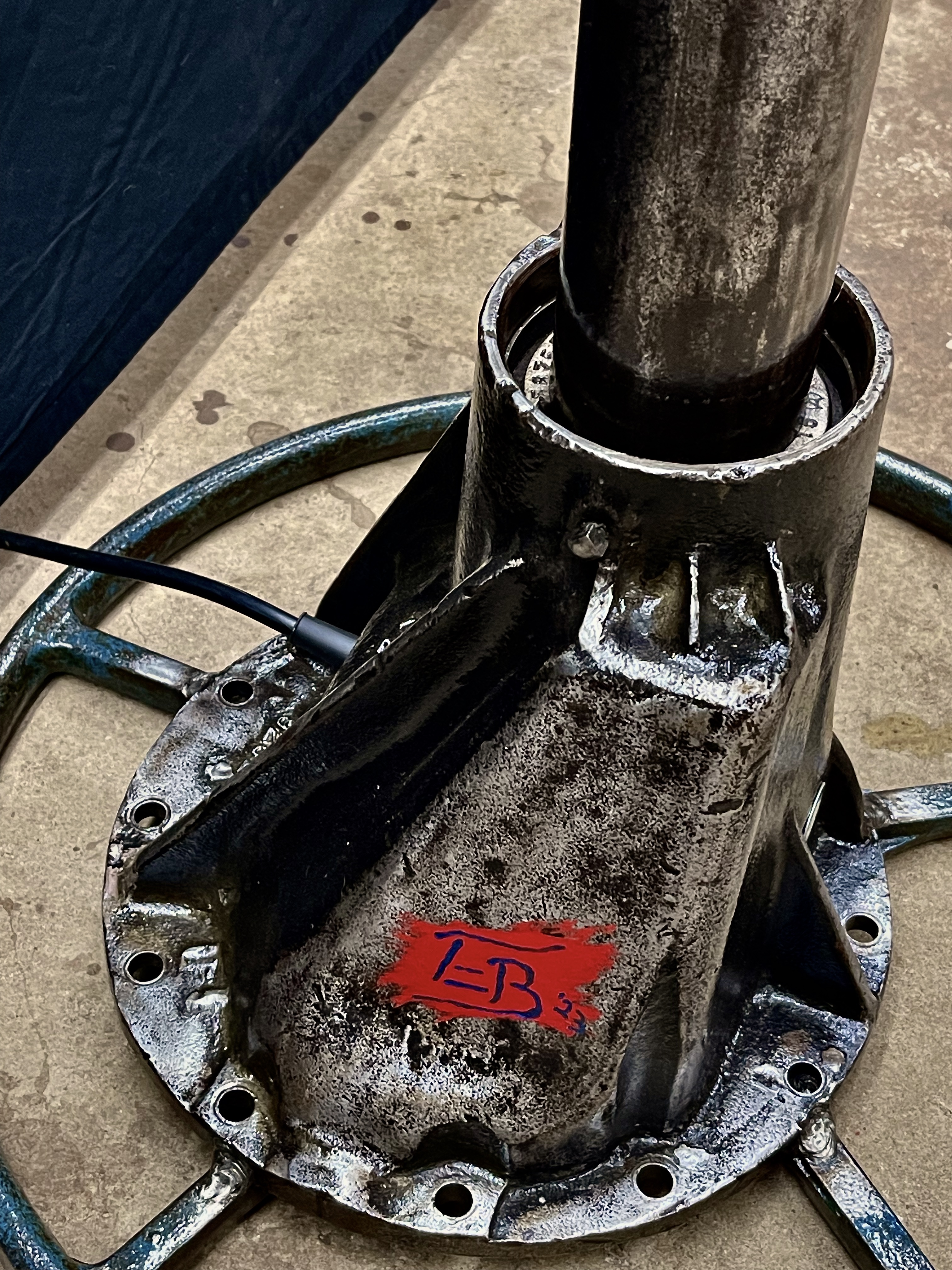
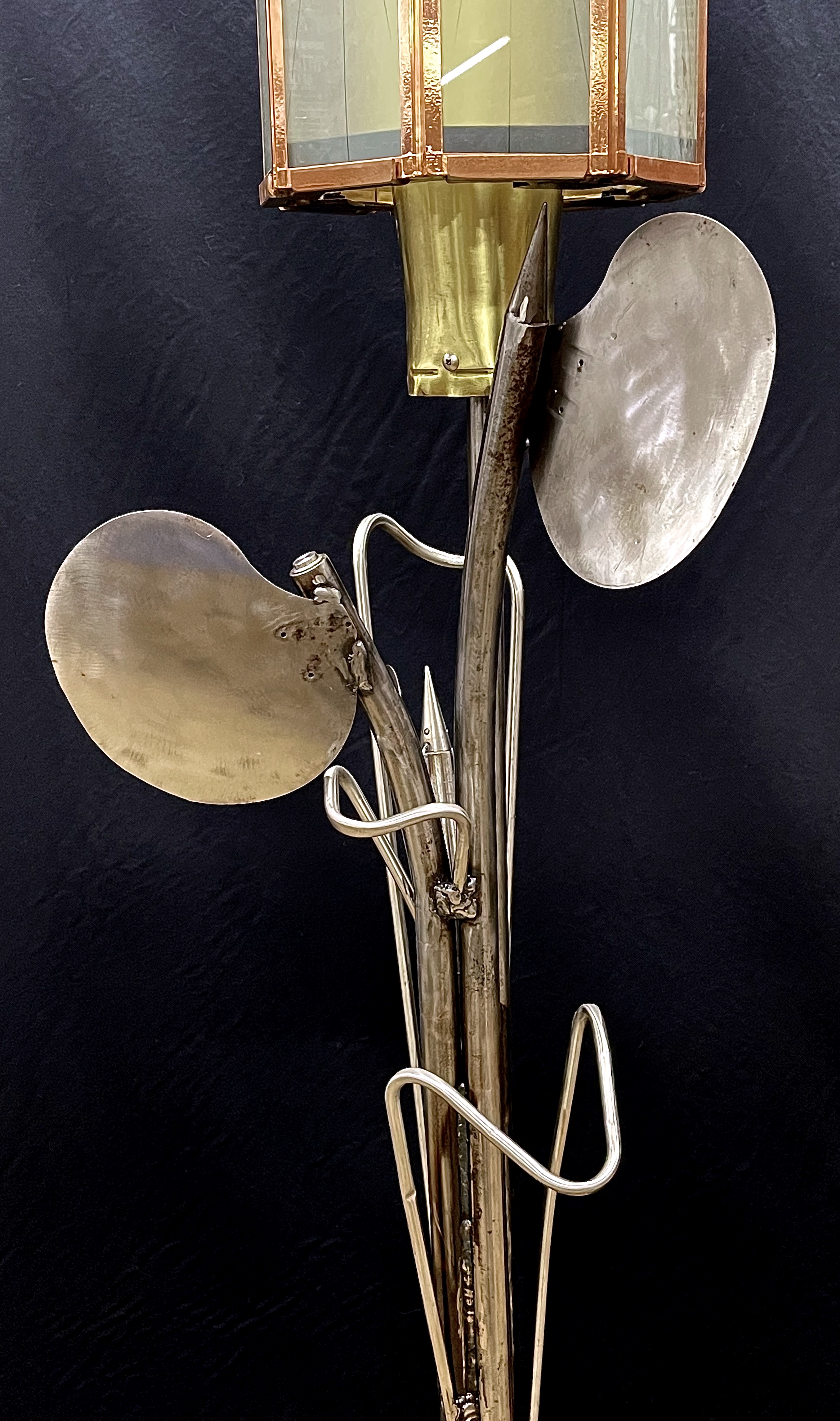
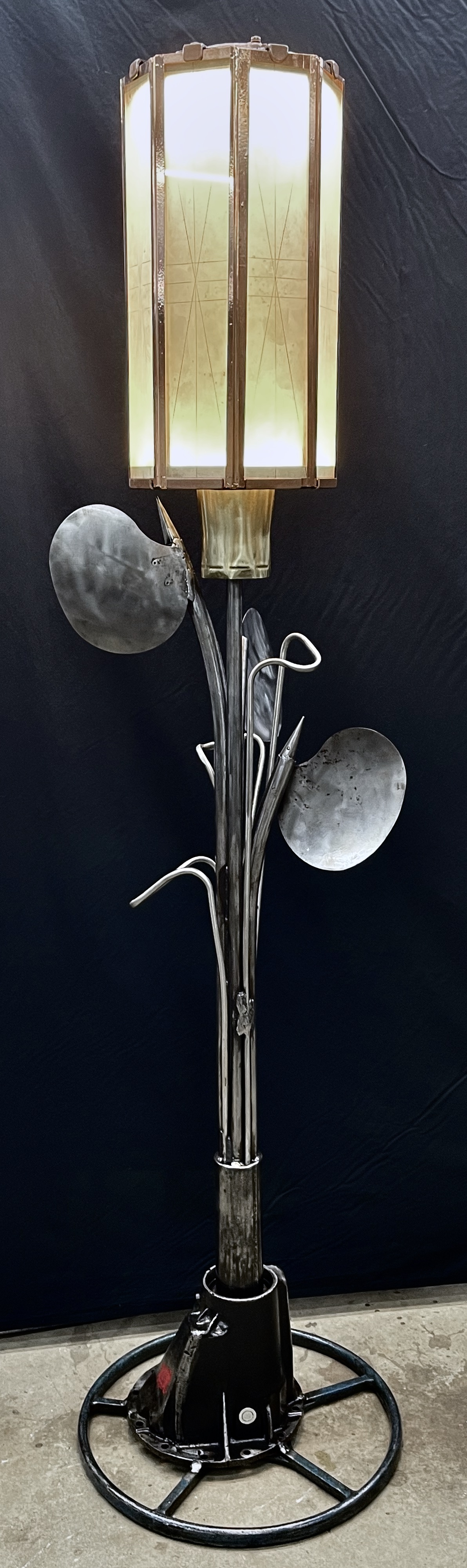
Most of my lamps take shape from the top down, this one grew from the bottom up. I started by welding the operating wheel from a 20″ waste gate valve to a ’48 Dodge Power Wagon differential housing that I got from a friend at church. Actually, I started by bringing a fresh load of random stuff into my shop, looking around, and thinking that I needed to use some older stuff up. The valve wheel and the diff housing had been kicking around for a while, and so I figured it was their turn. Around this same time, I had to replace a switch on one of the first standing lamps I ever built, The Alexandria Lamp. It’d been years since I really looked at that lamp, and I was reminded how much I liked the multi-pipe vertical section of it. Rather than stick with multiple vertical ½” pipes however, I bent one end of three ¾” pipes and welded them around a single ½” pipe going straight up. Two of the curved pipes got pex-expander cones (from a different church friend) welded in, with the third staying open for a push button switch. It looked sterile though, so I welded on blades from an antique desk fan (that I’d gotten from yet another friend), and then filled in the gaps between the pipes with some bent ⅜” stainless steel tubing that my dad found for me at an auction. From there I moved on to the light shroud design, and as is most often the case, I came up with an idea that would turn out to be a few steps beyond what I had any business attempting. A few months prior, another friend had given me a huge stack of 4″ wide x 3/16″ thick plate glass sections from an old glass-louvered window, and my idea now was to cut six of them down to ~19″ long and set them in a hexagonal frame made out of angle iron. Someone with better impulse control probably would have spent more time on the math. I on the other hand, laid everything out on my work table, eyeballed the angles, and cut all the parts. Before you chock that up to hubris, I would like to point out that when welding things like this the fitment of your pieces doesn’t need to be all that tight. As long as everything is clamped well, you can weld shut some good sized gaps. Well, I got what I paid for, and rather than a hexagon. my pieces formed an octagon. Frost said that sometimes “the best way out, is through.” So I just made a second octagon and spanned the two together. I added the center section from a jeep engine fan to the top so that I could attach the whole mess to that vertical ½” pipe and then welded on some angle iron brackets to hold the glass. Originally I had thought about wrapping some LED tape lights around the pipe in the center to serve as the light source, but I felt like I needed a bigger cylinder to increase the amount of light. Shop-wandering ensued, and I came across the pair of brass 90mm shell casings I had gotten from my great uncle. Don’t ask where he got them. I didn’t, and honestly I don’t really want to know. Variety may be the spice of life, but plausible deniability is the drink that makes it palatable. I drilled a hole through the bottom of one of the casings, and affixed it to my octagonal cage. As I was experimenting (buying/returning) tape lights, a good friend was over and offered two suggestions. One: Rather than use tape lights, why not try to find some ring style light bulbs and put them at the top and bottom of the cage, and Two: Come up with a way to Robert (that is, frost) the glass to help diffuse the light output. I was incredulous about the light bulbs, but a brief amazon search turned up a plethora of circular LED options that were promising. Etching the glass proved to be a bit more time intensive, but by adding some detail using 1/32″ pin-stripping tape, I ended up with something far exceeding what I had originally envisioned, and that cast light out and up (as shown in the last photo) in a truly extraordinary way. The final step was to set the glass in place and to finish the edges and joints with copper-foil. <— That’s a lot of text, but it’s a lot of lamp too. It’s also a great reminder that while so many of my pieces may sprout from my imagination, they grow to maturity by the input of those around me, and by input, of course I mean mostly their junk.


Approximate Dimensions:
78″ Tall, 20″ Wide
$2,400
 9 Bar Welding